
WELCOME BONUS 300%
UP TO €2000 + 100
FREE SPINS
UP TO €2000 + 100
FREE SPINS
Home → Blackjack
Blackjack at Supercasino: Variants, Rules and Payouts
Shoe, Cut Card, and 75 Percent Penetration
The Quantum Blackjack Plus Live table operates with specific penetration metrics that influence card counting viability. A 75 percent penetration rate means the cut card is reached after three-quarters of the shoe has been dealt, leaving approximately one-fifth of the cards remaining for the final round. This depth allows skilled players to track more high-value cards compared to shallow cuts in other variants.
Playtech designs this live dealer environment to maintain game integrity while offering multipliers up to 1000x on winning hands. The use of a physical cut card ensures transparency regarding when the current shoe concludes and a new one begins. Players cannot predict the exact moment of reshuffling beyond knowing the penetration threshold is set at 75 percent.
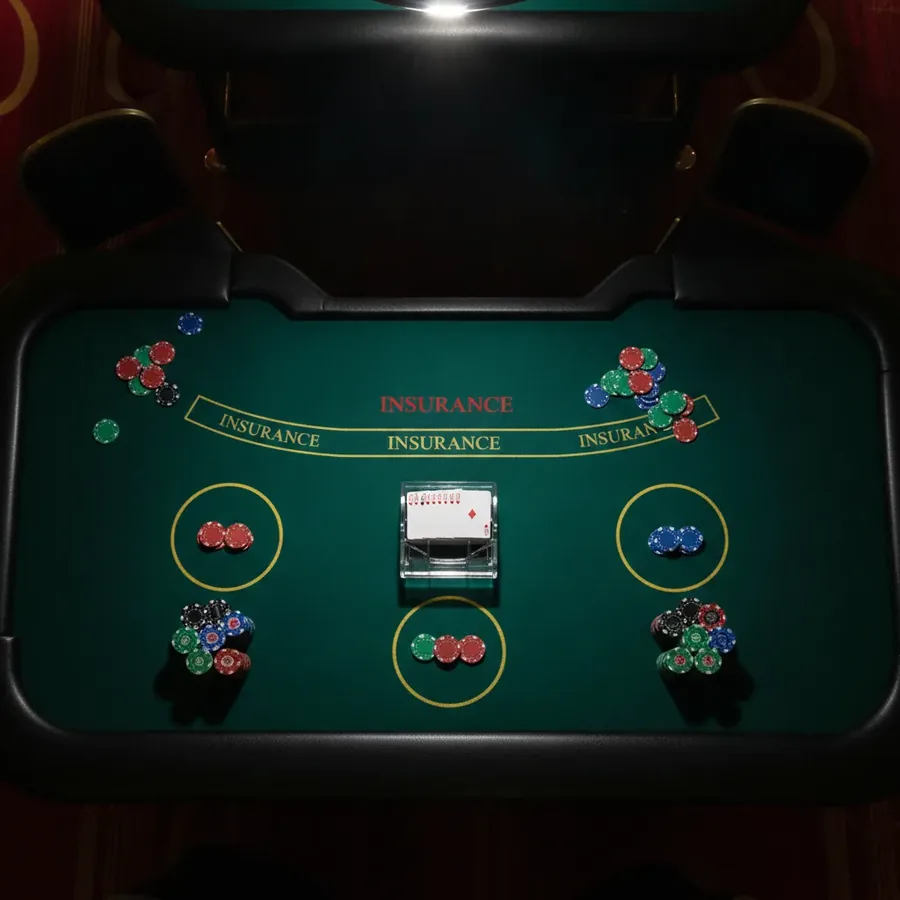
Surrender vs Playing Out on 16 vs 10
Late Surrender offers a strategic escape route by allowing players to forfeit half their bet after the dealer checks for blackjack. This rule improves the overall RTP by approximately 0.08 percentage points compared to games without surrender options. The mechanic applies only if the dealer does not hold an initial natural hand, protecting the player from total loss.
One Deck vs Eight Decks in House Edge
Reducing the number of decks from eight to one significantly lowers the house edge by about 0.48 percentage points. Single-deck games often compensate with unfavorable rules like 6:5 payouts, which add 1.39 percentage points back to the advantage. Without such penalties, the single-deck variant provides superior odds for mathematically precise players.
How long does a Live Blackjack round take?
Infinite Blackjack by Evolution accommodates unlimited seats, which can extend the duration of each round due to decision delays. Standard play typically requires several minutes per hand, including betting, dealing, and resolution phases. The presence of multiple side bets like Any Pair or Bust It adds complexity but does not drastically alter the base speed.
Which hands are excluded from Surrender?
Surrender is invalid if the dealer reveals a blackjack immediately upon checking their upcard and hole card. Players must wait for this verification before exercising the option to fold their hand and recover fifty percent of the stake. Early surrender, which is more valuable, is extremely rare and generally unavailable in standard online configurations.
Blackjack variants at a glance
| Variant | Payout | House edge | Rule | Bet range |
|---|---|---|---|---|
| Blackjack Liberal Vegas Strip (liberale Regeln, 3:2) | 99.72% | 0.28% | Günstigste Regelkombination: S17 + DAS + Resplit + Late Surrender. Standardabweichung 1,15 | Blackjack 3:2, Gewinn 1:1 |
| Blackjack Split / Double / H17 – Regel-Effekte | n.a. (Regel-Modifikatoren) | H17 +0.22 Prozentpunkte; RSA −0.08 Prozentpunkte; DAS −0.14 Prozentpunkte | Dealer Hits Soft 17 verschlechtert RTP um 0.22 Prozentpunkte; Resplit Aces verbessert um 0.08 Prozentpunkte; Double After Split verbessert um ca. 0.14 Prozentpunkte; 6 Decks statt 8 – ca. 0.02 Prozentpunkte. | Double – Einsatz ×2 mit einer Karte; Split – bis 4 Hände; Ass-Split meist mit einer Karte. |
| Blackjack Ein Deck, klassische Regeln, 3:2 | 99.85% | 0.15% | Weniger Decks = niedrigerer Vorteil; ein Deck gibt ca. −0.48 Prozentpunkte gegenüber 8 Decks. Oft durch 6:5 Auszahlung kompensiert. | Blackjack 3:2, Gewinn 1:1 |
| Blackjack Surrender (Late Surrender) – Regel-Effekt | n.a. (Regel-Modifikator) | −0.08 Prozentpunkte | Spieler gibt Hand nach Dealer-Blackjack-Prüfung auf, verliert die Hälfte des Einsatzes. Verbessert RTP um ca. 0.08 Prozentpunkte. Early Surrender ist wesentlich wertvoller (bis −0.6 Prozentpunkte), aber extrem selten. | Rückzahlung 50% des Einsatzes |
| Blackjack Insurance / Versicherung (6–8 Decks) | 92.53% | 7.47% | Separate Nebenwette bis 50% der Hauptwette, wenn der Dealer ein Ass hat. Basisstrategie schreibt IMMER Ablehnung vor (außer Karten zählen bei True Count ≥ +3). Bei einem Deck Vorteil ≈ 5.88% | Insurance 2:1 |
| Blackjack 6 Decks, S17, DAS, DOA, Auszahlung 3:2, Basisstrategie | 99.54% | 0.46% | Dealer steht auf Soft 17; Verdopplung auf jeder Zweierkarte; Verdopplung nach Split erlaubt; keine Aufgabe. Basisstrategie ist für diesen Wert zwingend | Blackjack 3:2, normaler Gewinn 1:1, Insurance 2:1 |
How much time is left for the decision?
The Blackjack Surrender rule allows players to forfeit half their stake after the dealer checks for blackjack, which improves the RTP by approximately 0.08 percentage points compared to games without this option. This specific modifier reduces the house edge significantly, providing a mathematical advantage that standard late surrender rules in other variants do not offer to the same extent. Players utilizing this feature effectively limit their maximum loss per hand to fifty percent of the original wager during unfavorable initial deals.
Early surrender provides an even greater benefit by reducing the house edge by up to 0.6 percentage points, yet this variant remains extremely rare in modern online casino environments. Most available tables only permit late surrender, meaning the player must wait until the dealer confirms they do not have a natural blackjack before making the surrender decision. Consequently, the timing of the choice alters the strategic value and potential return on investment for the gambler during active play sessions.
The Quantum Blackjack Plus Live table from Playtech features unique quantum multipliers that can reach up to 1,000x on three-card combinations totaling twenty-one points. These high-variance side bets operate alongside the main game but require separate consideration when calculating overall expected returns due to their distinct payout structures. The inclusion of such multipliers adds volatility that differs from traditional fixed-payout blackjack formats found in standard software-based implementations.
Mobile version needs 1 Mbit bandwidth
Infinite Blackjack by Evolution requires a minimum internet connection speed of 1 Mbit bandwidth to ensure smooth gameplay without interruptions or latency issues for mobile users. This technical requirement supports the continuous dealing mechanism that allows unlimited players to join the virtual table simultaneously without experiencing significant delays. Maintaining this bandwidth ensures the real-time video stream and game logic synchronization remain stable during extended gaming sessions on handheld devices.
The Infinite Blackjack variant operates with an RTP of 99.47% when played using optimal basic strategy, which relies heavily on consistent connectivity to access accurate statistical guidance. Side bets such as Any Pair, 21+3, Hot 3, and Bust It are available but contribute differently to the overall return because they carry separate odds. Understanding these distinctions helps players manage their bankroll more effectively while navigating the constraints of mobile network limitations.
Playtech’s Quantum Blackjack Plus Live offers betting limits ranging from 1 EUR to 5,000 EUR, accommodating both casual players and high rollers seeking substantial stakes. The provider’s platform demands robust data transmission to handle the complex calculations required for quantum multiplier activations during live dealer interactions. Insufficient bandwidth may result in missed opportunities to trigger these high-value multipliers, directly impacting potential winnings for those relying on this feature.
Clicked Too Late: Hand Is Automatically Held
Basic strategy dictates that players should always hit on a hard sixteen against a dealer seven or higher, unless surrender is permitted, to minimize long-term losses. Failing to follow this rule increases the house edge significantly, as standing on weak hands exposes the player to greater risk of busting or losing the round entirely. Adhering to mathematically proven decisions ensures the lowest possible house edge across various deck configurations and rule sets.
Double After Split (DAS) improves the RTP by approximately 0.14 percentage points by allowing players to double their bet on any card received after splitting pairs. This rule applies to most hands except Aces, where splitting usually permits only one additional card per new hand in standard variations. Utilizing DAS correctly maximizes profit potential in favorable situations while maintaining alignment with the fundamental principles of optimal blackjack strategy.
Resplitting Aces enhances the RTP by about 0.08 percentage points, offering an additional opportunity to generate winning hands from a single starting pair of aces. However, most casinos restrict resplitting aces to prevent excessive exploitation of this advantageous rule, limiting the number of times players can extend their gameplay. Recognizing these restrictions helps gamblers adjust their expectations and adapt their strategies accordingly when encountering different table limits.
Infinite Blackjack uses the Six Card Charlie
The Infinite Blackjack table provided by Evolution does not include the Six Card Charlie rule, which automatically wins hands with six cards under twenty-one; instead, it focuses on standard rules with four available side bets. Players must rely on the base game mechanics and basic strategy to achieve positive outcomes, as no special automatic win conditions exist beyond the standard blackjack payout of 3:2. This limitation distinguishes it from certain niche variants that incorporate unique bonus features for extended drawing sequences.
Side bets like 21+3 evaluate the player’s first two cards and the dealer’s upcard for poker-style combinations, paying out based on predefined tables rather than game flow. These wagers carry higher house edges compared to the main game, requiring careful bankroll management to avoid rapid depletion of funds during unlucky streaks. Understanding the odds associated with each side bet allows players to make informed decisions about whether to include them in their overall strategy.
Blackjack Party by Evolution creates a social atmosphere with two moderators guiding the game, though this entertainment factor does not alter the underlying mathematical probabilities of winning. The game accepts bets between 1.00 EUR and 1,000 EUR, providing flexibility for diverse player preferences while maintaining strict adherence to regulated payout structures. Social elements enhance engagement but do not influence the statistical return percentages determined by the dealer’s rules and deck composition.
Place Side Bet before cards are dealt
The Insurance side bet pays 2:1 if the dealer has a blackjack, but its house edge stands at 7.47%, making it highly unfavorable for most players. Basic strategy explicitly recommends rejecting insurance unless the player is counting cards and the true count reaches plus three or higher, which rarely occurs in standard shoe games. Accepting insurance without proper card counting skills results in a significant long-term loss due to the elevated house advantage inherent in this wager.
Quantum Blackjack Plus Live includes quantum multipliers that can apply to side bets, potentially increasing payouts on successful combinations involving specific card values. These multipliers range up to 1,000x, adding excitement but also introducing variance that complicates straightforward risk assessment for inexperienced participants. Players should evaluate whether the potential reward justifies the increased volatility introduced by these random multiplier events during live gameplay.
Table games contribute only 10% toward bonus wagering requirements, whereas slots contribute 100%, creating a substantial disparity in how quickly bonuses can be cleared through different game types. This restriction means that placing side bets on blackjack tables generates very little progress toward meeting the turnover conditions attached to promotional offers. Gamblers aiming to maximize bonus utility should prioritize slot machines over table games to accelerate the clearance process efficiently.
Which rule variants does the software show?
The software implements a Blackjack variant paying 6:5 instead of the standard 3:2, which significantly alters the mathematical expectation for players. This specific payout structure increases the house edge by exactly 1.39 percentage points compared to games offering the traditional 3:2 ratio. Consequently, a winning $10 bet yields only $12 rather than the expected $15, reducing player returns substantially.
Standard rule modifiers like hitting on soft 17 add another 0.22 percentage points to the house advantage, while resplitting aces improves it by 0.08 percentage points. These individual adjustments stack to create a final game environment where the baseline house edge reaches 1.85 percent. Players must account for these compounding factors when evaluating the long-term viability of their bankroll strategy.
Additional options such as doubling after split contribute a minor 0.14 percentage point reduction to the house edge, slightly mitigating the overall disadvantage. However, the negative impact of the 6:5 payout far outweighs these small technical benefits available in other contexts. The resulting RTP of 98.15 percent remains lower than most liberal rule sets found elsewhere.
What Push Means: Stake Returns to You
A push occurs when the player and dealer tie, resulting in the immediate return of the original stake without any win or loss. In this specific 6-deck game, the probability of such an event depends heavily on the deck composition and specific dealing rules applied by the software. Understanding this mechanic is crucial because pushes do not count towards certain bonus wagering requirements or loss limits.
The insurance side bet offers a separate 2:1 payout if the dealer has an ace, but carries a steep 7.47 percent house edge that erodes funds over time. This high-cost option should generally be avoided unless the player employs advanced card counting techniques with a true count of at least +3. Standard basic strategy dictates always declining insurance due to its negative expected value.
Late surrender allows players to forfeit half their bet after the dealer checks for blackjack, providing a slight improvement of 0.08 percentage points to the RTP. This rule offers a strategic escape route from otherwise losing hands against strong dealer upcards, preserving capital for future rounds. Early surrender, though more valuable, is extremely rare and not present in this specific software configuration.
When does the table max bet apply?
Live tables such as Quantum Blackjack Plus impose maximum bet limits ranging from 1 to 5,000 EUR depending on the specific provider and game mode selected. Evolution's Infinite Blackjack also caps stakes at 5,000 EUR, accommodating high rollers while managing the operator's liability exposure. These limits define the upper boundary for single wagers across all live dealer offerings.
Table games contribute only 10 percent towards bonus turnover requirements, meaning players must wager ten times the nominal amount to clear promotional funds. A €2,000 bonus thus requires €20,000 in eligible bets, significantly extending the time needed to unlock withdrawable cash. Slot contributions at 100 percent offer a faster path, but table players face stricter financial constraints.
Side bets like Any Pair or Bust It on Infinite Blackjack operate under separate rules and may have distinct maximum limits independent of the main game. These auxiliary wagers often carry higher house edges and different contribution percentages to bonus clearing processes. Players must verify specific table rules before placing supplementary bets to ensure compliance with bonus terms.
Splitting Eights vs Standing on 16
Basic strategy mandates splitting eights regardless of the dealer's upcard, transforming a weak total of sixteen into two potentially strong starting hands. Standing on hard sixteen against a dealer seven or higher is statistically inferior, leading to higher long-term losses due to bust probabilities. This fundamental decision directly impacts the effective house edge experienced by the player.
Doubling down on any two cards, including after splits, provides additional opportunities to maximize wins when holding favorable totals like eleven. This liberal rule reduces the house edge by approximately 0.14 percentage points compared to games restricting doubles to specific hand values. Utilizing this option correctly is essential for minimizing the casino's mathematical advantage.
Resplitting Aces allows players to re-split pairs of aces if they receive another ace, creating up to four separate hands from the original pair. This rule improves the player's position by roughly 0.08 percentage points, though many casinos restrict subsequent hits on split aces. Strategic adherence to these nuances ensures optimal play within the constraints of the software's ruleset.
Check table limit before the first bet
The welcome bonus of 300 percent up to €2,000 requires careful consideration of table limits to avoid violating wagering conditions or triggering account restrictions. High-limit tables allow larger individual bets, accelerating turnover but increasing volatility and potential rapid depletion of the bonus balance. Players must align their betting strategy with both the bonus size and the specific table's maximum stake.
Insurance bets pay 2:1 but carry a 7.47 percent house edge, making them financially detrimental over extended play sessions despite their attractive payout ratio. This side bet is limited to 50 percent of the main wager, capping potential losses but never offsetting the negative expected value. Avoiding insurance is critical for maintaining the integrity of a basic strategy approach.
Quantum Multipliers on Quantum Blackjack Plus can multiply payouts up to 1,000x on three-card combinations totaling twenty-one points, introducing significant variance. These multipliers apply to specific hands and do not alter the base RTP of 99.57 percent achieved through optimal strategy. Players should understand that such features are random events rather than consistent income sources.
Contact
Live - online chat
Banking









Providers












Supercasino 2026